
Why Strength Training Is Essential for Healthy Ageing and Longevity
Strength Training for Longevity: It’s About More Than Living Longer
Most people want to live a long life—but longevity isn’t simply about adding more years. It’s about staying strong, capable and independent enough to enjoy those years.
That is where strength training becomes so important.
As we get older, we naturally begin to lose muscle mass, strength and bone density. This can make everyday activities harder and increase the risk of falls, fractures and loss of independence. Strength training helps us fight back against these changes.
Muscle is your longevity insurance
Muscle isn’t only about how your body looks. It helps you walk, climb stairs, carry shopping, get up from the floor and continue doing the activities you love.
The stronger you are now, the more physical reserve you are likely to have later in life. Building muscle is like putting money into a health pension: the work you do today can support you for years to come.
Research has also found an association between regular strength training and a lower risk of premature death. This doesn’t mean lifting weights guarantees a longer life—but it can be an important part of a lifestyle that supports a longer, healthier one.
Strong bones need resistance
Bone density also tends to decline with age, particularly for women during and after menopause.
Strength training places controlled stress on the bones. Over time, this encourages them to adapt and become stronger. Exercises such as squats, deadlifts, presses, carries and step-ups can all help support bone health when performed with suitable resistance and good technique.
This matters because strong bones can reduce the likelihood of serious fractures later in life.
It helps protect your independence
One of the greatest benefits of strength training is that it keeps everyday life easier.
You are training for much more than a heavier lift in the gym. You are training to:
Get out of a chair without assistance
Carry your own bags
Lift things overhead
Play with your children or grandchildren
Catch yourself if you stumble
Continue travelling and enjoying an active life
These may sound like ordinary things, but maintaining the ability to do them is a huge part of healthy ageing.
Better balance and fewer falls
Falls become more dangerous as we age, but strength training can improve the muscles that support balance, coordination and stability.
Training the legs, hips and core helps your body respond more effectively when you trip or lose your balance. Combining strength work with exercises that challenge coordination and movement can provide even greater benefits.
Support for your metabolism
Muscle is metabolically active tissue. Maintaining it helps your body use glucose more effectively and supports healthy blood-sugar control.
Strength training can also help improve body composition by preserving or increasing muscle while reducing excess body fat—particularly when combined with balanced nutrition, good sleep and regular daily movement.
It supports confidence as well as strength
Getting physically stronger often changes how people feel outside the gym too.
Learning new movements, lifting weights you once thought were impossible and noticing everyday tasks becoming easier can build confidence. Training also creates routine, social connection and a sense of progress—all valuable parts of long-term wellbeing.
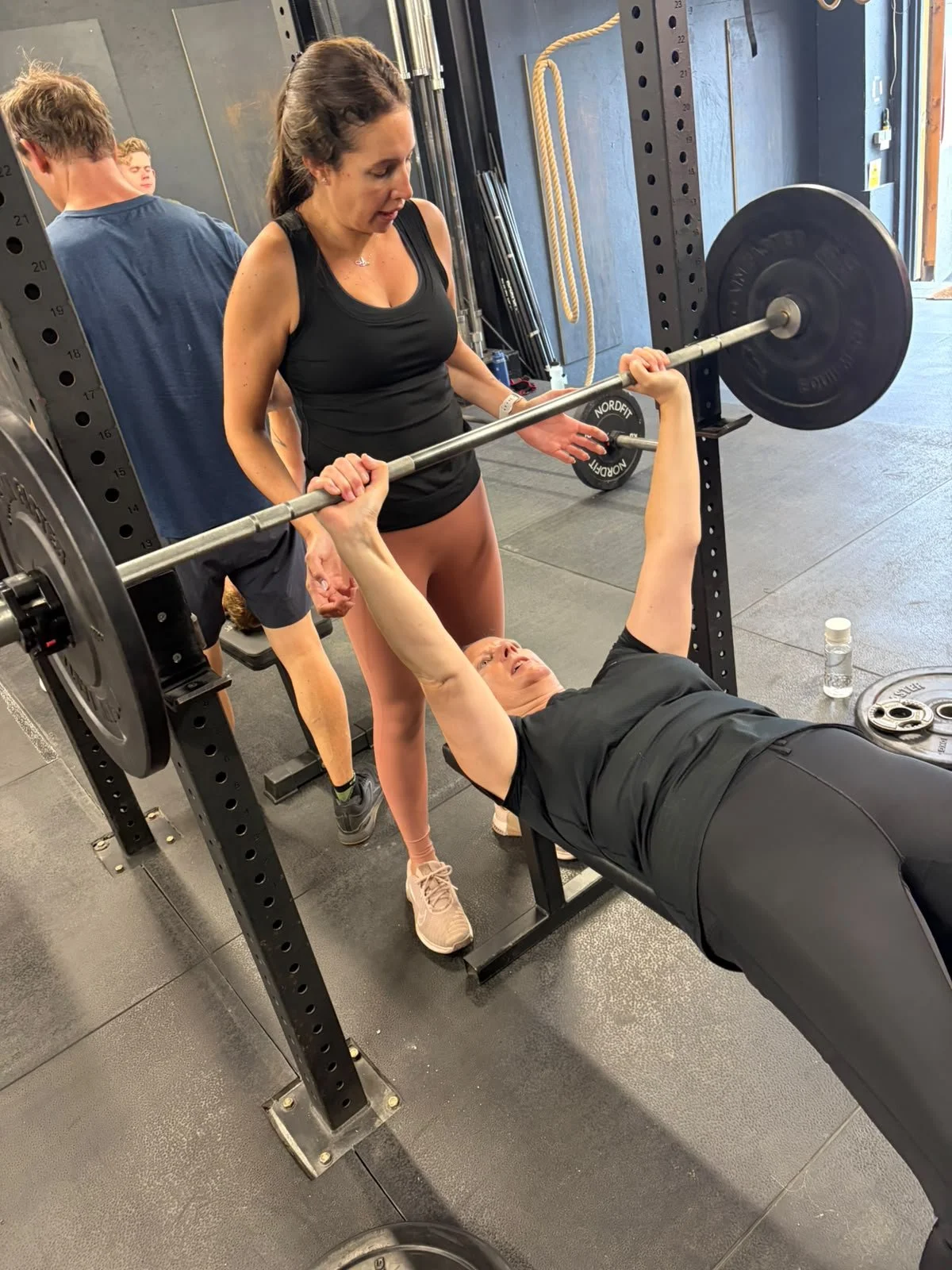
Do you need to lift extremely heavy weights?
No. Strength training should challenge you, but it must be appropriate for your experience and ability.
You can build strength using:
Free weights
Resistance machines
Kettlebells
Resistance bands
Bodyweight exercises
The most important things are consistency, good technique and gradually increasing the challenge as your body adapts.
Health guidelines recommend muscle-strengthening activity on at least two days each week, alongside regular cardiovascular activity. You don’t have to spend hours in the gym—but you do need to keep showing up.
It is never too late to begin
You don’t need to already be fit, strong or confident before starting. That is what training is for.
At Chalkbox, our sessions are coached and adapted to different levels. We will teach you how to move safely, choose suitable weights and progress at your own pace.
Because strength training isn’t only about building a stronger body today.
It’s about protecting the life you want to live tomorrow.
Ready to start building strength for life? Contact Chalkbox to arrange your first session and discover how coached strength training can work for you.
If you have an existing medical condition, injury or concerns about beginning a new exercise programme, speak to an appropriate healthcare professional before starting.