
The CrossFit Pyramid: Building Health Before Problems Begin
The CrossFit Pyramid: Building Health Before Problems Begin
Most people only start thinking seriously about their health when something goes wrong.
They develop pain, feel constantly tired, struggle with their weight or receive worrying results from a blood test. At that point, they visit their GP and begin trying to fix the problem.
But what if we started working on our health before those problems appeared?
That is one of the ideas behind the CrossFit pyramid: building strong foundations that support long-term health, fitness and independence.
What is the CrossFit pyramid?
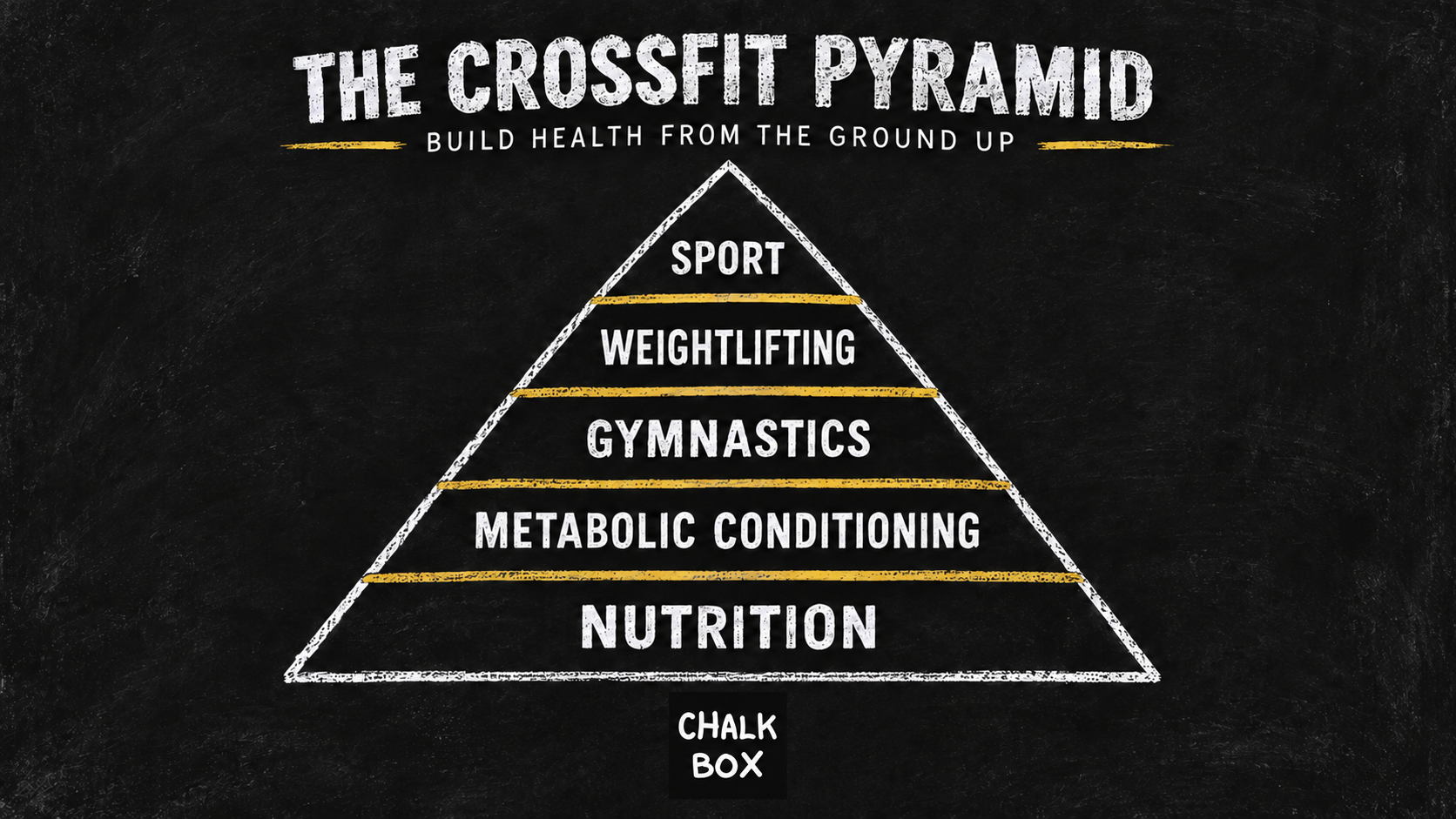
The CrossFit pyramid shows the different elements that contribute to developing fitness:
Nutrition
Metabolic conditioning
Gymnastics
Weightlifting and throwing
Sport
Each level supports the one above it. While real-life training does not always follow a perfectly straight line, the pyramid reminds us that lasting fitness needs strong foundations.
Nutrition: the foundation
Nutrition sits at the bottom because what we eat affects nearly every part of our health and performance.
A balanced diet provides the energy needed to train, supports recovery and helps the body maintain muscle, bone and normal physical function. Eating well can also help us manage our weight, blood pressure, blood sugar and cholesterol.
That does not mean following a perfect or restrictive diet. It means making sensible choices consistently: eating enough protein, including plenty of nutritious whole foods and finding a way of eating that can be maintained in normal life.
Training hard cannot completely compensate for poor nutrition—but nutrition alone will not make your body strong and capable either. We need both.
Metabolic conditioning: training your engine
The second level is metabolic conditioning, often simply called cardio.
This includes walking, running, rowing, cycling, swimming and the conditioning work we use during Chalkbox sessions.
Cardiovascular training challenges the heart and lungs and improves the body’s ability to deliver and use oxygen. It can support heart health, stamina, blood-pressure management and blood-sugar control.
This is what helps you climb stairs without becoming breathless, recover between exercises and maintain energy during everyday life.
Gymnastics: controlling your own body
In CrossFit, gymnastics does not just mean handstands and muscle-ups. It includes any movement in which you control your body through space.
Squats, press-ups, pull-ups, lunges, planks and getting up from the floor are all examples of body control.
These movements develop balance, coordination, mobility and relative strength. They also prepare us for daily life because we need to be able to move and control our own bodies before adding significant external weight.
Every movement can be adapted. A press-up against a box or a supported squat is still valuable training when it is the right level for you.
Weightlifting: building strength for life
Once we can control our bodies, adding external resistance helps us become stronger.
Weightlifting can include barbells, dumbbells, kettlebells, medicine balls and resistance machines. It helps build and preserve muscle, strengthens bones and makes everyday tasks easier.
We are not only training to lift heavier weights in the gym. We are training to carry our shopping, lift a suitcase, get up from a chair and remain physically independent as we age.
Sport: using your fitness
Sport sits at the top of the pyramid. It is where we apply everything we have developed: stamina, strength, coordination, balance and confidence.
For some people, that might mean entering a fitness competition. For others, it could be playing with their children, going skiing, hiking on holiday or simply enjoying an active life.
The purpose of training is not only to become better at exercising. It is to become more capable outside the gym.
Moving from sickness towards fitness
CrossFit also describes health as a continuum:
Sickness → Wellness → Fitness
Health is not simply a choice between being ill or healthy. There is a large space between the two.
Someone may not have a diagnosed illness but could still be moving in the wrong direction. Their blood pressure, blood sugar, body composition, strength or cardiovascular fitness might gradually be deteriorating without causing obvious symptoms.
Likewise, someone who trains consistently, eats well and looks after their recovery may improve many of these markers and move towards greater fitness.
This does not mean exercise can prevent or cure every illness. Genetics, age, environment and many other factors affect our health. However, physical inactivity and poor nutrition are recognised risk factors for several chronic diseases.
Training gives us an opportunity to work on the things we can influence.
Prevention and medical care should work together
The aim is not to avoid going to the GP when something is wrong.
Pain, unusual symptoms or changes in your health should not be ignored. Health checks, screening programmes, medication and professional medical advice remain important.
Our aim is to reduce the likelihood of preventable problems and build a stronger, more resilient body before a crisis forces us to take action.
Think of exercise as paying into your health account. Every sensible training session, nutritious meal, good night’s sleep and active day is another small investment.
You may not notice the return immediately, but those investments can become increasingly valuable as you get older.
Start building your foundation now
You do not need to be fit before you begin, and you do not need to master the entire pyramid at once.
At Chalkbox, we help members improve each area gradually. Movements, weights and intensity are adapted to the individual, allowing everyone to work at an appropriate level while still making progress.
You can start by improving one meal, attending two sessions each week or becoming slightly more active each day.
Don’t wait until something goes wrong before investing in your health.
Build the foundation now—and give your future self the strongest possible chance of remaining healthy, active and independent.
Exercise and good nutrition can support health and reduce certain risk factors, but they are not substitutes for medical diagnosis or treatment. Seek appropriate medical advice if you have symptoms, an existing health condition or concerns about starting exercise.